Venice · Contemporary art
Venice Biennale: leave room to look
The main trade-off is not simply how many exhibitions to see. It is whether a route gives you enough attention for the work, rather than using most of your energy reaching it.
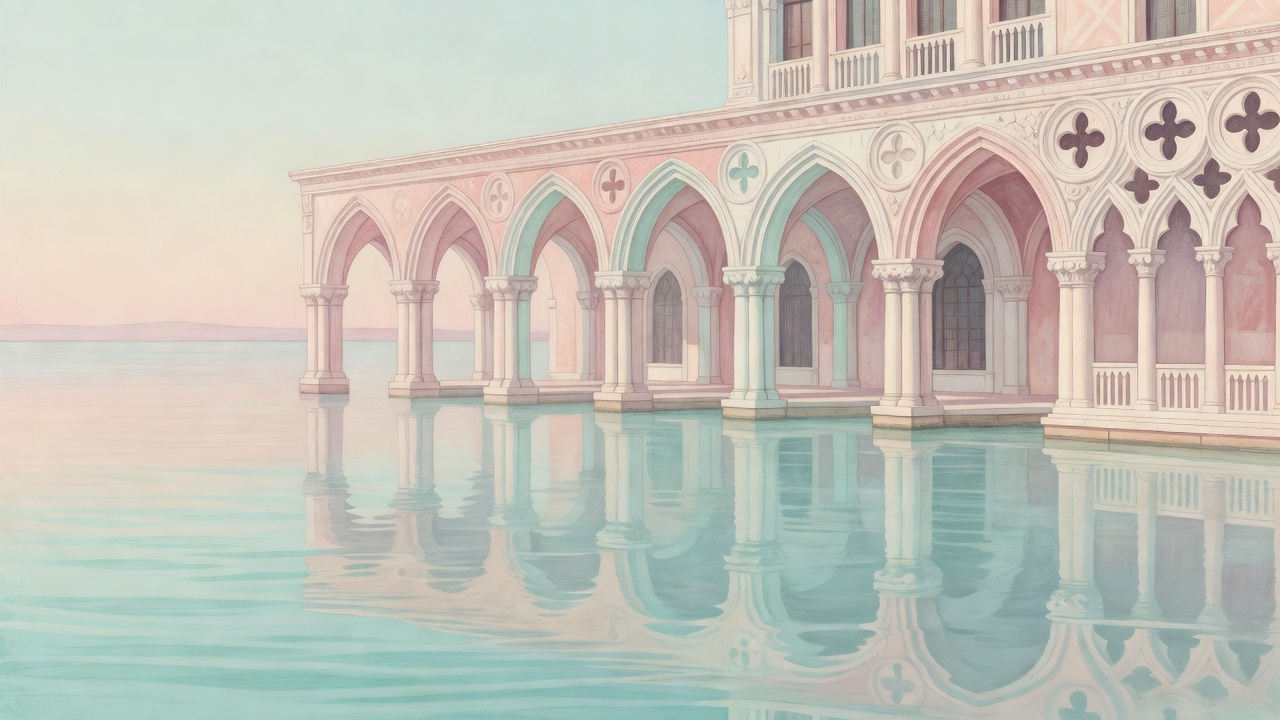
Understand which Biennale you mean
La Biennale di Venezia is an organisation encompassing several cultural disciplines. This guide concerns its International Art Exhibition, rather than its architecture exhibition or film festival. That distinction matters when searching for tickets: a familiar name is not evidence that the programme you want is taking place during your trip.
The art exhibition brings a curated international exhibition into conversation with national participations and collateral events. These are related strands, not interchangeable labels. A national pavilion presents a particular participation; a collateral event has a specific relationship to the Biennale. An independent exhibition elsewhere in Venice should not automatically be described as either.
Start with the official Biennale art pages. Use the programme and visitor information to establish the edition, locations and admission terms. This guide deliberately does not supply a calendar or suggest that a ticket covers every exhibition mentioned around the city.
Giardini or Arsenale is a planning question
The Giardini contains purpose-built national pavilions alongside a central exhibition building. The Arsenale uses parts of Venice’s historic shipyard complex. The distinction influences the rhythm of a visit: moving between separate pavilion buildings feels different from following an exhibition through a sequence of large industrial spaces.
Neither setting is intrinsically the better starting point. If your interest is in the curatorial argument of the main exhibition, follow its published structure. If particular national presentations are the priority, locate those first. Treat a recommendation to “see everything” cautiously: video, sound, installation and reading-heavy work can ask for very different amounts of attention.
Combining both principal sites may suit a broad survey, but separating them can preserve concentration. Whether either plan is possible depends on the ticket’s entry and re-entry rules. Do not infer those rules from a previous edition, a third-party itinerary or the fact that both sites carry the same event name.
The city adds interest and friction
Exhibitions beyond the principal sites can lead into churches, palazzi and other spaces across Venice. Their setting may be part of the appeal. It also creates practical uncertainty: opening arrangements, access, queues and booking requirements can differ from those at the central exhibition.
Build a route by area rather than by the order in which titles caught your eye. A short-looking distance on a map may involve bridges, a different canal crossing or a waterbus journey. Venice’s pedestrian geography makes clustering particularly useful, but it does not remove the need to examine an actual route.
For step-free requirements, consult the organiser’s accessibility material and the specific venue. Historic buildings and bridges should not be treated as a uniform access environment. Ask about the entrance you will use, lifts, seating, accessible toilets and the route between arrival point and exhibition, rather than relying on a general accessibility symbol.
Make a selective viewing plan
A useful starting point is to identify the works or themes that would justify the visit, then add nearby options. Keep a distinction between priorities and possibilities. That gives an exhibition permission to hold your attention without making the rest of the itinerary feel like a failure.
Read a short exhibition introduction before entering, but consider postponing longer commentary until after looking. Context can clarify a difficult work; too much advance interpretation can also narrow what you notice. There is no neutral formula here, only a choice about the kind of encounter you prefer.
Before booking, resolve the exact exhibition dates, closed days, ticket scope, accessibility arrangements and any separate reservations. Accommodation and transport are separate commitments. A flexible city plan cannot compensate for a fixed exhibition booking that does not match your travel.
Compared with a scheduled film or concert, Venice offers more freedom over the pace of attention. Its cost is navigational complexity and the temptation to accumulate stops. It is a stronger fit for someone comfortable making choices while looking than for someone who wants a single contained evening.